
Who teaches the scientists to master the machines?
A lab full of robots and instruments is only as useful as the people who can run it. At the Â鶹Æƽâ°æ Institute of Biotechnology, technical specialists are training researchers from across the UK to put that equipment to work.
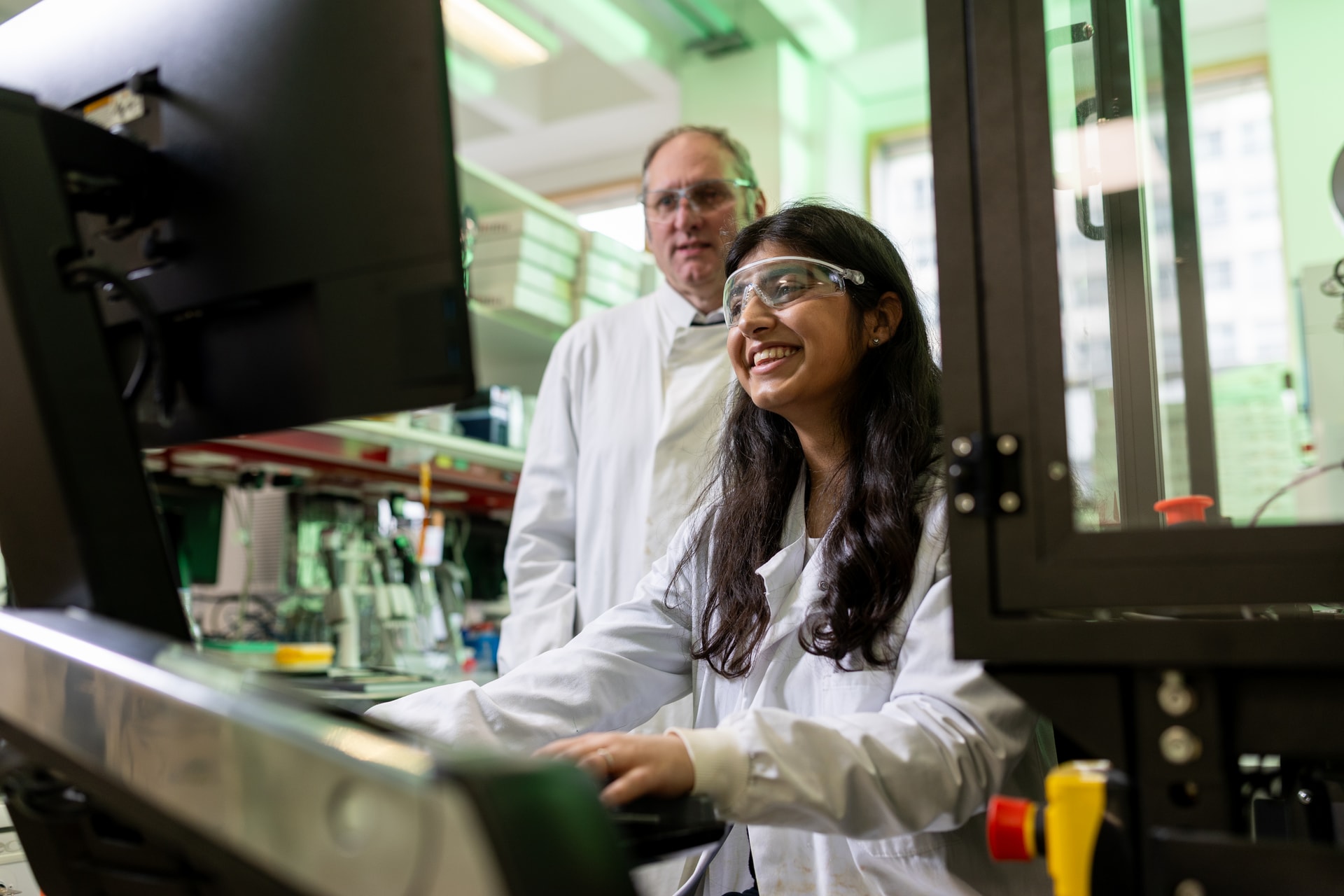
This month, 25 PhD students will arrive at the Â鶹Æƽâ°æ Institute of Biotechnology (MIB) for three weeks of training. They’re not there to sit in a lecture theatre; they’re there to learn how to use the machines of the future. Robots that can run thousands of tiny experiments while scientists sleep, instruments that weigh molecules with extraordinary precision, and X-ray equipment that reveals the three-dimensional shape of a protein. Every one of the machines can empower researchers to ask new questions and accelerate discoveries – questions like ‘can we build a better enzyme or design new biological pathways?’
The missing half of the equation
The engineering of biomolecules, such as proteins, DNA, RNA, sugars and natural products from biological pathways, is essential for a greener and more sustainable society as we transition away from using petrochemicals. Biomolecule engineering is the craft of redesigning them, so that an enzyme can perform a new function, such as producing key pharmaceutical compounds, or a microbe can build useful chemicals from waste.
The equipment in the MIB aids with that every step of the way: digitally designing molecules (researchers call this working in silico), then engineering, testing and checking that the right molecule has been built with the right structure. Each stage requires its own technology, and each technology has its own learning curve before it can be used properly. After all, an experiment is only as good as the person running it.
That’s what the Â鶹Æƽâ°æ Biomolecule Engineering Centre (MBEC) exists to do: having the right equipment is only half the challenge; the other half is having people who know how to use it accurately, consistently and safely.
A mass spectrometer will give you an answer whether or not you asked the right question. Knowing how to prepare the sample and what the result is really telling you is the experience you need before you use it.
A training hub, not a booking system
The MBEC began in 2024, backed by £1.2 million from the Engineering and Physical Sciences Research Council. First to be trained were three of the Institute’s own staff, and since then it’s built a programme for the UK’s research community.
Researchers and technical professionals can ask for bespoke training, or apply for a funded two-week secondment, working alongside the specialists who run the equipment day to day. The aim is that people leave with methods and standard operating procedures (SOPs) that they can take back to their own laboratories.
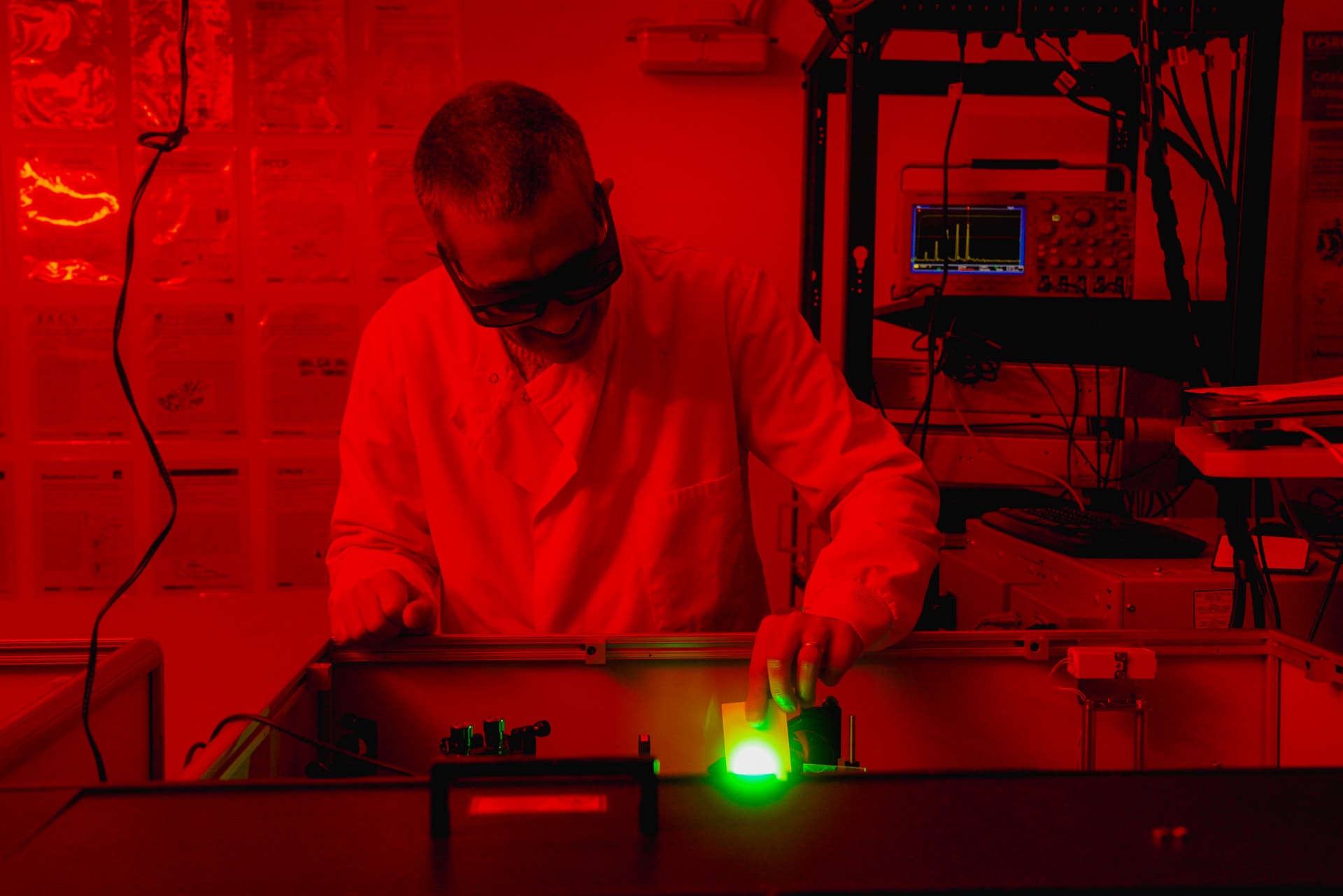
Specialist technologies are only as powerful as the expertise behind them. MBEC gives researchers hands-on training to use advanced equipment confidently and effectively
The centre supports everyone, right from PhD students through to experienced scientists looking to continue their professional development. Each year, two workshops catering for different doctoral programmes are hosted, doctoral training networks and apprentices are welcomed, and twenty school students have taken on work experience placements, giving them their first experience of working in a live laboratory setting.Ìý
At the other end of the scale, SMEs including Imperagen, Recircle and Simplex Molecular have benefitted from the training, with companies able to access protocols and SOPs online, so that good practice can travel far beyond the MIB.Ìý
This training is already paying off for many participants. After coming to MBEC to learn more about using and collecting preliminary data on one of the instruments, a recent visiting researcher went on to succeed in their own bid to the Biotechnology and Biological Sciences Research Council (BBSRC) for similar equipment. Another recent trainee shared that she particularly appreciated the time she spent with the team “calculating ratios, discussing methods and working through the details.â€�Ìý
For Dr Mark Dunstan, it’s clear what success looks like: “The best day for us is when someone is not only able to set up instruments and run experiments themselves, but to teach the person at the next bench. We’re looking for trainees becoming trainers.�
Ìý
Advanced technology only becomes transformative when people have the skills and confidence to use it well. MBEC brings specialist expertise and hands-on training together so researchers can take new techniques back into their own work.
Twenty years and counting
MBEC builds on more than two decades of engineering biology at the MIB. If the Institute’s first twenty years were about gathering the expertise, funding and facilities under one roof, its next chapter is about opening the door.Ìý
MBEC will continue to train the next generation of researchers, scientists and industrialists in emerging engineering biology technologies. So, when the latest cohort of PhD students head back to their universities, or researchers return to their companies, the real test of their training will be what they do next.
Get in touch
Explore training, funded secondments and opportunities to work with Â鶹Æƽâ°æ's technical specialists.
- Visit the